Showing posts with label monarch butterfly. Show all posts

Wednesday, April 29, 2015

Northeast Native Milkweeds: Five beautiful ways to sustain the monarch butterfly

Milkweeds in my monarch way station #5687
I see so many people wanting to plant a pollinator garden but in most cases they leave out the milkweed. Maybe it's the "weed" part of the name? I've also heard landscapers say that it's hard to grow, or you can't transplant it because of the delicate tap root.

I do not know why milkweed gets left out when gardeners readily buy non-native butterfly bushes, which can't sustain any native butterfly larvae. So here are five milkweeds that are beautiful, native to the northeast, easy to grow and both swamp and butterfly weed are readily available at most local nurseries here north of Boston. And remember: milkweed is the only plant monarch caterpillars can eat. You have no more excuses. Go out and plant one of these natives this spring:


BUTTERFLY WEED: Asclepias tuberosa

"Hello Yellow" butterfly weed
This has a bright orange flower, grows to about 2 feet tall, prefers part to full sun, flowers until late September in my garden and is drought tolerant. I've never had monarchs lay eggs on it in my garden, they always go for the taller swamp milkweed. But near the Ipswich MA Public Library there's a beautiful pollinator garden with only butterfly weed representing the milkweeds and I've found eggs and caterpillars on it.  Butterfly weed also doesn't mind bad soil, I plant it along my road where the road salt and dogs don't seem to bother it like my other perennials.


Butterfly weed


SWAMP MILKWEED: Asclepias incarnata

Ice ballet swamp milkweed

The native form of this plant has a pink flower, but there is a cultivar called Ice Ballet that is white. I have both in my garden and have found monarch eggs on both colors. Swamp milkweed gets about 36" to 48" tall, prefers part to full sun and can tolerate standing water. Yet, the name is a bit of a misnomer, once established it's actually completely drought tolerant as well.

Swamp milkweed


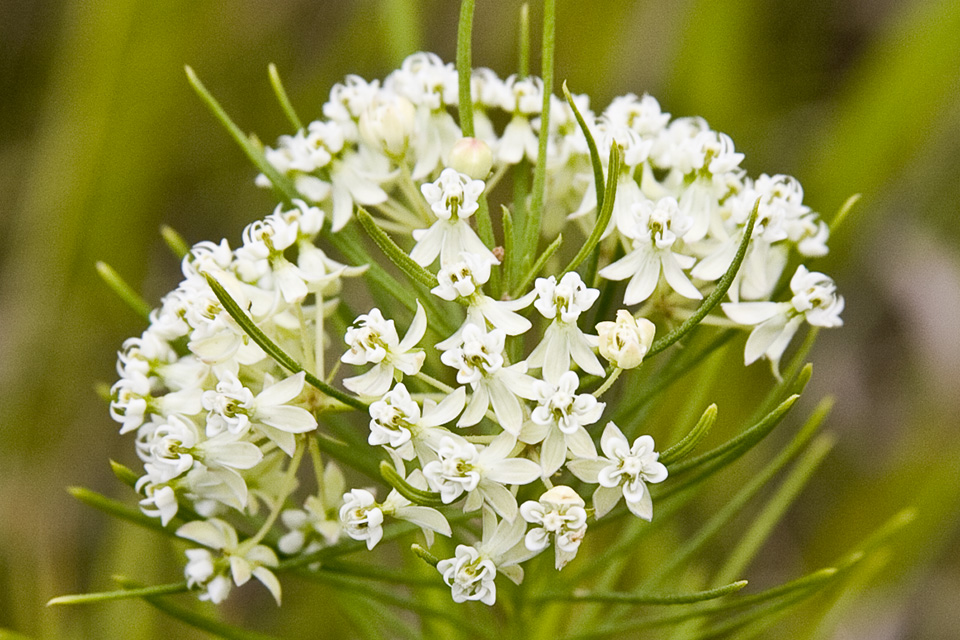
WHORLED MILKWEED: Asclepias verticillata


Whorled milkweed

This is a white milkweed, grows to about 24" tall, prefers part to full sun and I have it for the first time this spring in my garden. It's not as easily found in nurseries. I started mine from seeds but they are doing well and I'm looking forward to adding these to my monarch way station.


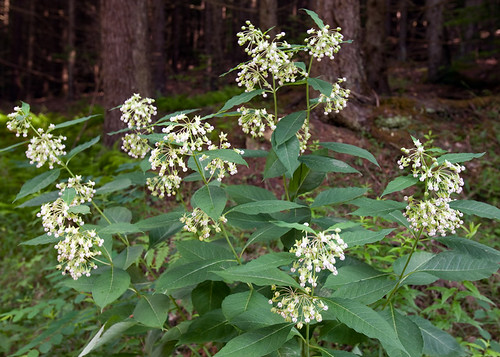
POKE MILKWEED: Asclepias exaltata


Poke milkweed

I am very excited about this native milkweed! It's a tall white milkweed often found growing at the edges of woodlands so is shade tolerant. Many gardeners tell me they can't grow milkweed because they have no sun. Well now you can. I have never seen this at a nursery so I ordered 3,000 seeds and they're sprouting now. My plan is to establish this in my backyard where it's all shade and invasive garlic mustard is always popping up.


COMMON MILKWEED: Asclepias syriaca 

I don't recommend this for a small garden, it will not behave and will send its rhizomes everywhere. But if you have a big space or a meadow plant it!



Friday, March 13, 2015

Monarch butterfly and native milkweed late winter update: spring is coming and milkweed is sprouting!

It's been a long winter. Ipswich, Massachusetts, has received over 100 inches of snow. As you can see my monarch way station #5687 is buried. Two days ago the sign finally emerged from the glacier that is my front yard. The snow cover is now only about three feet deep, down from four to five feet in most places and drifts and snow banks formerly up to ten feet tall.


Despite the snow, it has also been a good winter. News from Mexico tells us that the monarch population has had a small rebound. Small. Don't get too excited. The total 2014/2015 overwintering population covered a mere 1.13 hectares, up from an all-time low last winter of 0.67. Not quite doubled, but it's a start. 


And more good monarch news: The U. S. Fish and Wildlife Service announced a broad monarch conservation plan including a combined $3.2 million of USFWS funds and public and private donors to support habitat creation and education.  (The USFWS 'Save the Monarch' page even has a link to this blog under 'Regional Stories: from a local homeowner" !)

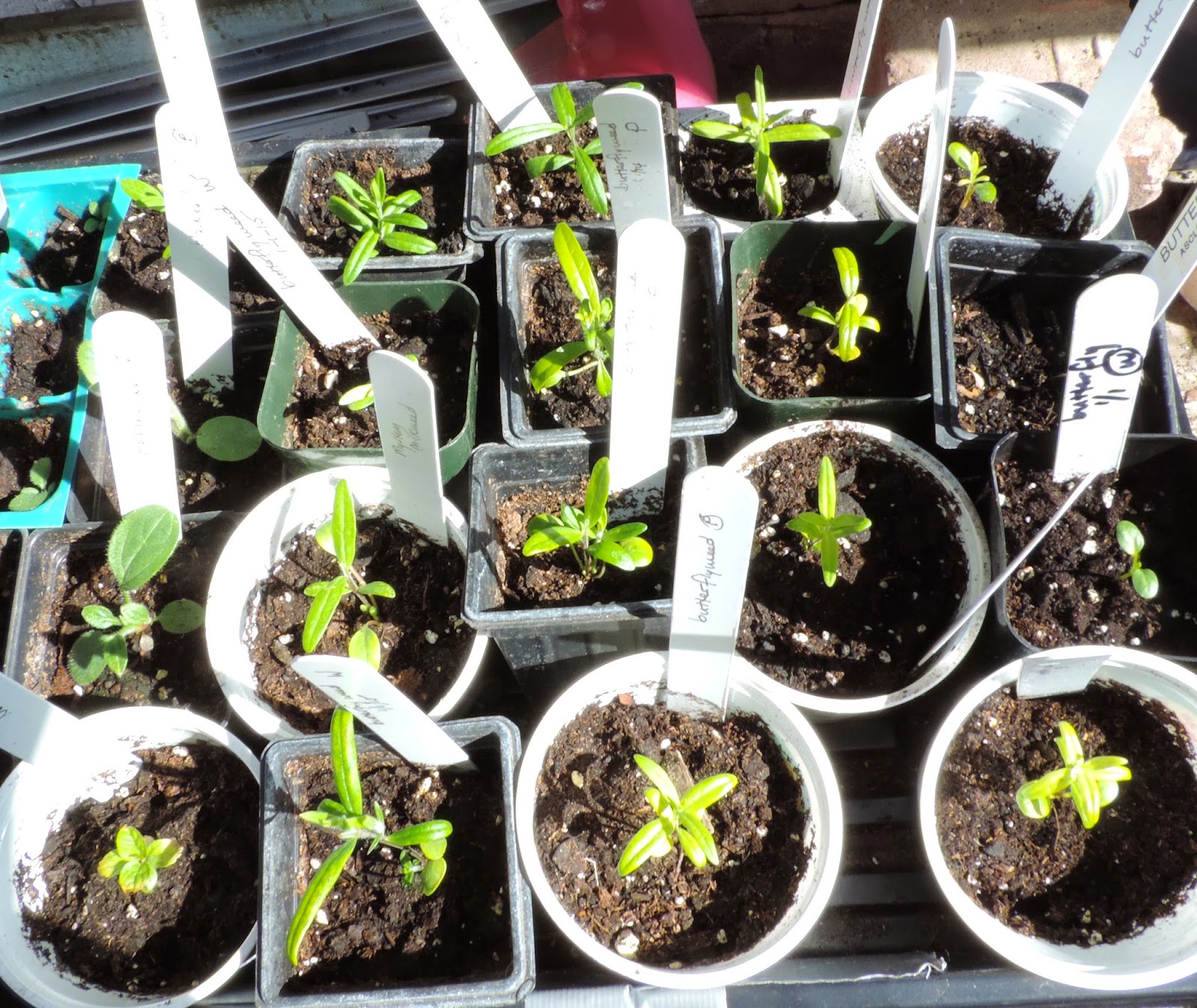
Successful monarch conservation still comes down to one thing: plant milkweed, it is the only food monarch caterpillars can eat. And my greenhouse is cranking it out! Butterfly weed has been up since late January, it's already three inches tall.

Butterfly weed (Asclepias tuberosa

I've got a second batch of butterfly weed coming up this week:

Three day old butterfly weed (Aslepias tuberosa)
The common (A. syriaca) and whorled (A. verticillata) milkweed seeds planted in flats last year were dug out of their four foot deep protective snow blanket ten days ago and started sprouting yesterday. And I just obtained seeds for poke milkweed (A. exaltata), a shade-loving milkweed also native to Massachusetts. So no more "I don't have any sun" as an excuse to not grow milkweed!


If you've ever wondered if snow really does protect your perennials check this out: I dug a dozen potted mature swamp milkweed plants out from under four feet of snow and tiny new shoots had already formed:
Potted swamp milkweed (Asclepias incarnata) has already woken up under the snow. 
If you're planning on growing milkweed from seeds and didn't manage to spread them in your garden last fall the best way to get them to sprout is place them in damp sand or vermiculite in your fridge for two to three months. Then soak them in warm water for at least 24 hours. This duplicates the cold and damp winter they would experience in nature and the subsequent warm spring. 

Happy milkweed planting everyone! Look for me at local farmers markets on the North Shore this spring and summer. I announce where I'll be each week on my website. I'll try to have plenty of all five native milkweeds I'm growing available. Monarch mass exodus from Mexico will happen any day, let's get more milkweed planted for when they arrive here in late June and hopefully we can double the monarch population again next year!


Monday, September 15, 2014

Fall Plantings for Pollinators

A newly tagged monarch on Mexican sunflower
Creating a beautiful and functioning pollinator garden means having blooms from the earliest bluestars in late April all the way to the last flowering sedum that survives the first frosts. Good nectar sources are especially important during September and October for the millions of fall migrating monarchs that have to travel up to 2,500 miles to their winter grounds in the mountains of central Mexico. 


Monarch nectaring on butterflyweed

This generation of monarchs won't reproduce until next spring, so they don't necessarily need milkweeds for their offspring. Although, butterflyweed (my favorite milkweed -to the right) is still blooming in my garden and feeds many pollinators from monarchs to fritillaries to honeybees. 


My monarch waysation on September 14th.

I've tagged and let go more than a dozen monarchs amongst my flowers in the last few weeks. The tag numbers can be reported to Monarch Watch if they're recovered anywhere along the butterfly's migration. 

The newly released monarchs still have more than a dozen kinds of flowers to nectar on from the perennial black eyed susans, joe pye weed, sedum, garden phlox, ox-eye sunflowers and echinacea to the stunning annual mexican sunflower and red lantanas.  The best part about all these plants is once they're established they're drought tolerant. I haven't watered my monarch waystation all summer!


White chocolate snakeroot about to flower in mid-September
While some of my perennials are starting to fade, the white chocolate snakeroot is about to explode in a riot of delicate white flowers. Until that moment, this beautiful plant adds a stunning dark green and purple foliage to the garden. And then its tiny white flowers last until November, past when most other plants have gone to seed and the goldfinches descend for the feast. 


Garden phlox
Even if you just add a $1.98 pot of mums to a window box that little nectar source will go a long way to a bee, butterfly or hummingbird that wakes up on a 40 degree morning. A walk through any nursery will show you what's still blooming and many of those nurseries also have great end-of-year sales. I picked up this garden phlox (left) last year half off and it's going strong right now! So add some blooms to your fall garden. Your neighborhood pollinators will thank you. 


Black eyed susans amongst white snakeroot starting to flower


Tagged monarchs on black eyed susans

Eastern tiger swallowtail on joe pye weed

Echinacea